 Alec Furrier
Attitude Determines Altitude: The Intangible Lessons of Video Games from a Top-Ranked FPS Player
Top 5 in the world in Titanfall 2, and 2nd, 3rd, and 5th at world tournaments before finally taking 1st. The best predictor of long-run success was never aim. It was attitude and heart.
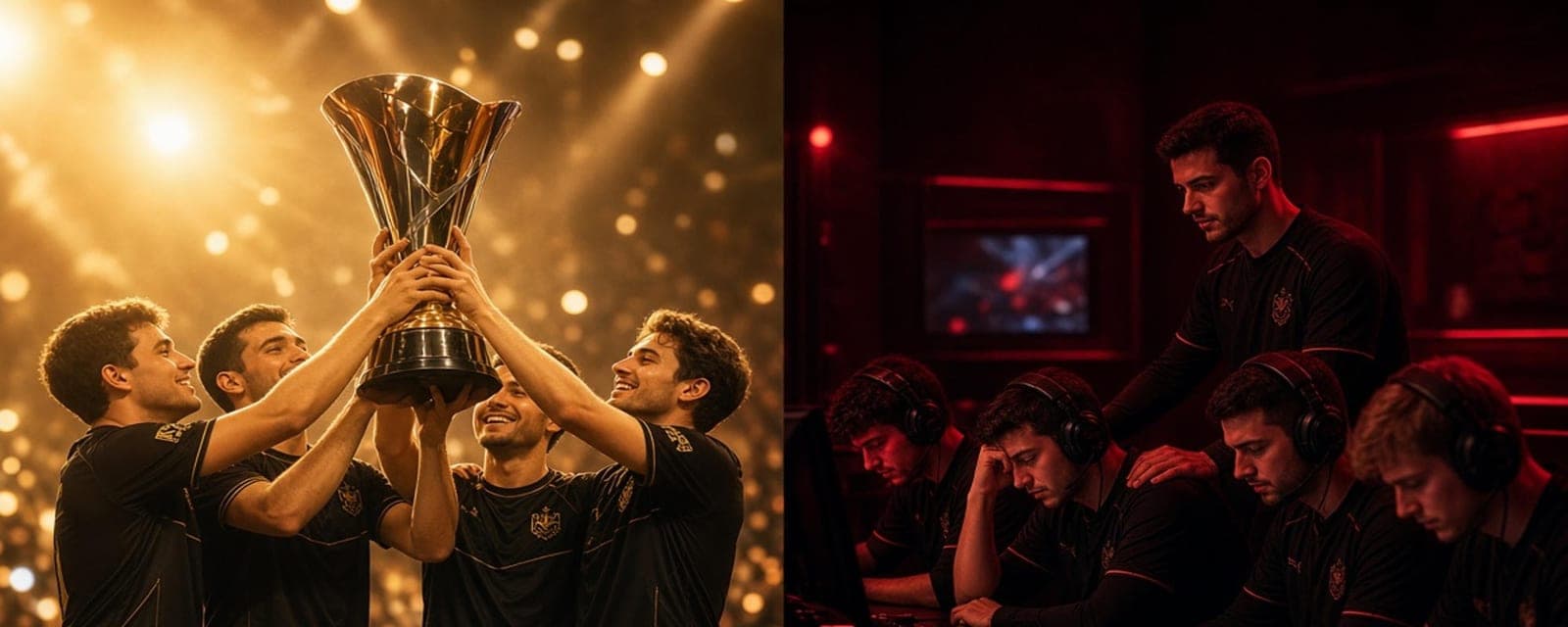
You can tell a lot about a person by how they treat their teammates when they are losing.
Winning hides character. Everyone is patient when the scoreboard is in their favor. Down 0–3, with a teammate who keeps dying the same way, is when you find out who someone really is.
I was ranked top 5 in the world in Titanfall 2, a competitive FPS multiplayer game, where I was also the in-game leader of one of the top teams in the world. I have reached the top 500 in multiple other competitive games. People tend to assume the lessons from that are mechanical: reaction time, aim, map awareness. Those skills are real. But they're not what separated the players at the very top from everyone else.
The most valuable lessons were intangible. How to deal with adversity. How to lose. How to play for the team instead of for yourself. And what to do the next day.
Attitude, not aptitude, determines altitude
An old saying goes: "attitude, not aptitude, determines altitude."
I watched that play out over thousands of matches. Mechanical talent gets you into the conversation. It doesn't get you to the top, and it doesn't keep you there. At high ranks, almost everyone can aim. The gap between a good player and one of the best in the world is rarely their hands. It is what happens in their head after a bad game.

What the lower ranks look like
Spend enough time in solo queue and the patterns become predictable.
Blaming teammates. The match starts going badly and the chat fills up. "Useless team." "Worst players I've ever seen." "Uninstall." Very rarely does anyone say, "They're holding that corner, let's rotate," or "Their sniper is the problem, I'll flank." The complaint is about people. The fix would be strategy.
Rage quitting. One lost fight, one bad round, and they leave. The team is now a player down, the loss is locked in, and the person who quit learned nothing because they weren't there for the part where the lesson was.
Tilting. They stay in the game, but they are not really playing anymore. They take fights they would normally avoid, chase kills out of frustration, and queue again immediately to "win it back." One loss becomes five.
The common thread is that the outcome is always someone else's fault. Teammates, matchmaking, lag, a broken game. When the problem is always external, there is nothing to improve. You cannot fix mistakes you refuse to see. So the rank stays where it is, the frustration grows, and the next game goes worse.
Blaming your team feels like protecting yourself. In practice, it keeps you stuck.
What the top of the leaderboard looks like
The best players I competed against had a completely different relationship with losing.
They did not enjoy it. Nobody at that level is indifferent to a loss. But they treated a loss as information instead of an insult.
They look inward first. After a loss, the first question is "What could I have done differently?" and not "Who cost us that game?" Even when a teammate made the bigger mistake, there is almost always a decision you could have made better: a rotation, a timing, a fight you should not have taken.
They improve regardless of their current record. Win streak or losing streak, the process stays the same. Review what happened, pick one or two things to fix, practice them, play again. Their improvement does not depend on how the last session went. A good week is not a reason to coast. A bad week is not a reason to quit.
They communicate instead of complaining. When a match is going wrong, the useful player says what to change. "Stack this side." "Save for next round." "I'll call their timing." Suggesting a better strategy helps the team. Flaming your teammates just makes four people play worse.
They play the long game. A single match is a tiny sample. The best players treat one game the way a disciplined investor treats one day in the market: noise around a longer trend. The only question that matters is whether the trend is going up.
They control what they can control. Teammates, matchmaking, and connection quality are out of your hands. Your positioning, your decisions, your composure, and your willingness to learn are not. The best put all of their energy into the second list.
Play for the team, not the stat line
FPS games put your stats in front of you after every match. Kills, deaths, K/D ratio, damage, accuracy. It is easy to start playing for those numbers instead of for the win.
You see it in every lobby. The player who finishes with the most kills on the losing team. The player who will not push the objective because dying would hurt their ratio. The player chasing highlight clips while the rest of the team fights a man down.
At the top level, that mindset does not survive. Winning teams are built from players who will do the unglamorous work: hold the angle nobody else is watching, trade their life so a teammate can win the fight, play the objective while the other team is busy farming kills.
Some of the most valuable players on my rosters rarely topped the scoreboard. They made everyone around them better. One great individual player on a team of individuals loses to a team of good players who play as one.
Stats measure what you did. Wins measure what the team did. Only one of those gets you first place.
Leading a roster taught me what to look for
As the in-game leader, my job was more than making calls during a match. I consistently managed both an A team and a B team: a full roster of players, some young and some much older, at different skill levels and different stages of development.
When you manage a roster, you are constantly deciding who to invest in. Who moves up to the A team, who needs more time, who will still be improving a year from now. Raw skill was the most obvious signal, and it was the least reliable one.
The main indicators of long-run success were attitude and heart. The players who took feedback without getting defensive, who stayed locked in during a losing match, who put the team's result ahead of their own stats, and who showed up to practice after a bad night were the ones who kept getting better. Given enough time, they tended to close the gap on players with more natural talent. The talented players who blamed others or checked out when things went badly tended to plateau, no matter how good their aim was.
Second, third, fifth, then first
Before we won a world tournament, we lost somewhere between five and ten of them. We placed 2nd. We placed 3rd. We placed 5th.
Every one of those results was close enough to hurt. And every one was an opening to decide the problem was a teammate, the format, the maps, or bad luck. That is the point where a lot of teams start pointing fingers and fall apart.
What we did instead was the same thing the best individual players do, applied to the whole team. Figure out what actually lost us the series. Fix the strategy, the comms, and the roles. Show up to the next event better than we were at the last one, whether the last result was 2nd or 5th.
Then we took 1st.
That win did not come from one breakthrough. It came from refusing to let any of those losses be the end of the team. I also note that WHO you let into your team matters. Iron sharpens iron.
The better you get, the more mistakes you see
The other lesson was about learning in real time.
Early on, you notice your mistakes after the match, if you notice them at all. As I improved, that feedback loop got shorter. I started catching my own mistakes as they happened: a bad rotation while I was making it, a call I knew was wrong seconds after I made it, a position I needed to leave before I got punished for staying.
Counterintuitively, getting better meant seeing more of my own mistakes, not fewer. Newer players often feel like they are playing fine because they cannot see what they are doing wrong. At a high level, you see almost all of it.
That is what made the rate of improvement compound. A mistake caught in real time is a correction you can make in the same match, not next week. In a game as fast as Titanfall 2, where fights are decided in seconds, the players who could adjust mid-match pulled away from the players who could only adjust between matches.
It ties back to attitude. You can only catch your own mistakes in real time if you are willing to look for them. A player busy blaming teammates is looking outward during the exact moments they most need to look inward.
What competitive FPS actually builds
Attitude is the foundation. On top of it, high-level team FPS builds skills that carry well beyond the game.
Real-time decision-making. Fights are decided in seconds, on incomplete information. Where is the enemy most likely to be? Push or hold? Take the fight or reset? You have to commit before you are certain. Research backs this up: a study by Green, Pouget, and Bavelier found that action video game players made decisions faster than non-players, with no loss in accuracy.
Sharper thinking. A 2022 study in Scientific Reports followed more than 9,000 children in the US and found that those who played more video games than average gained about 2.5 IQ points more than average over the following two years. It is a modest effect, measured in children, but it matches what I experienced: games that demand constant problem solving train the brain the way the gym trains the body.
Communication. Comms were vital, and good comms are not the same as a lot of comms. A spammy team talks constantly and says nothing. "He's over there!" is noise. "One low, behind B, reloading" is information. The best teams keep calls short, specific, and actionable, and stay quiet when there is nothing useful to say, so the calls that matter actually get heard. That discipline transfers directly to meetings, incident response, and any team working under pressure.
Strategy. At the top level, mechanics are the minimum requirement. Matches are won on preparation and adaptation: studying how opponents play, building a plan around your roster's strengths, and changing the plan mid-match when it is not working. As an in-game leader, my job was as much about reading the other team and making the right call as it was about my own aim.
Leadership. Running a roster of players, young and old, means giving feedback people can actually use, keeping the team composed when a series is slipping, and making decisions that are right for the team even when they are unpopular with one player.
Composure. All of these skills fall apart when emotions take over. Staying calm while down in a series is what lets the rest of them work.
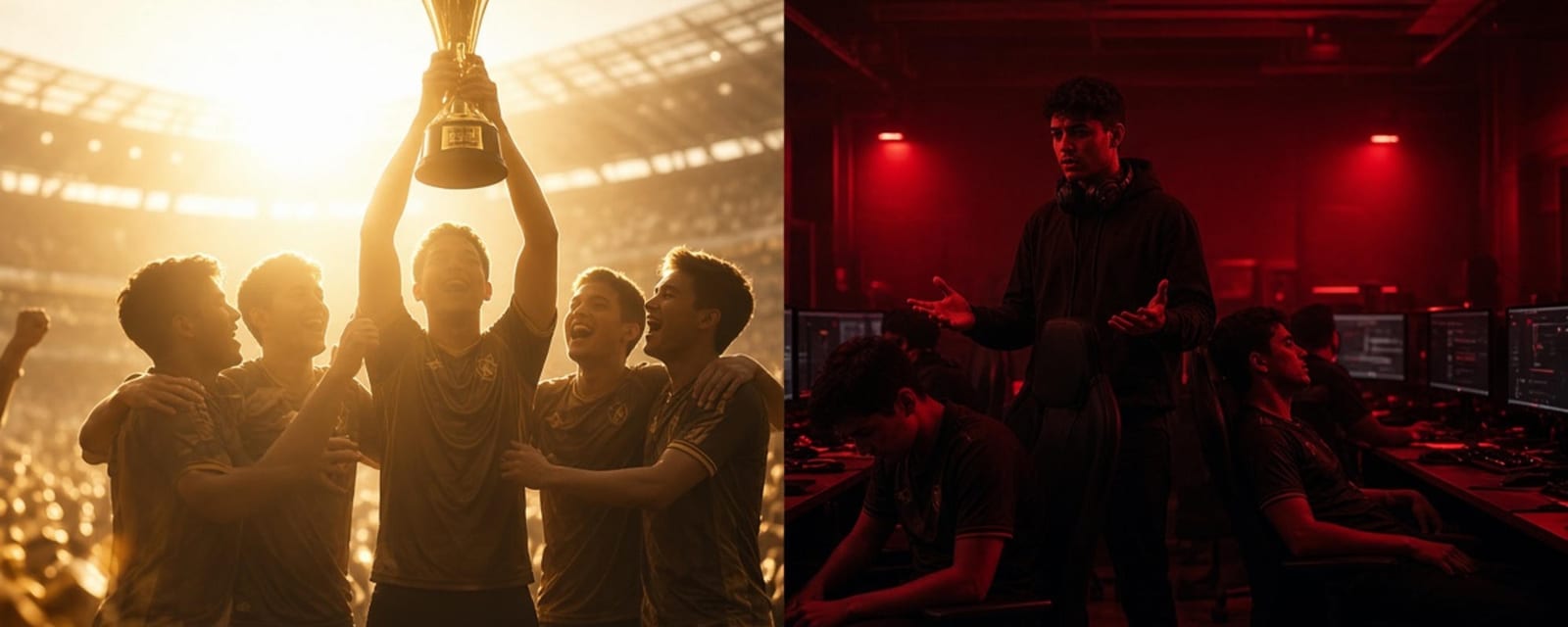
It was never really about the game
These lessons carry over, because every team eventually loses.
At work, projects fail, launches slip, and deals fall through. Some people's first move is to find someone to blame. Others ask what the team can do differently next time. You already know which one you would rather work with, and which one ends up trusted with more responsibility.
The same goes for playing for the team. Plenty of people optimize their own stat line at work: the visible wins, the credit, the personal metrics, while the team's result suffers. The people worth building around care about the team's result first.
It is easy to be a good teammate when you are winning. Your character shows when you are not.
Competitive games are one of the few places where you get that test dozens of times a day, with a clear scoreboard and immediate feedback. Used well, that is a fast training loop for resilience: lose, reflect, adjust, queue again.
Aptitude sets your starting point. Attitude decides how far you climb.

About Alec Furrier
Builder, sovereign systems architect, and competitive operator. Alec designs agentic infrastructure, runs elite-level combat sports and lifting cycles, and posts raw field notes from the intersection of AI autonomy, physical performance, and strategic capital deployment.