
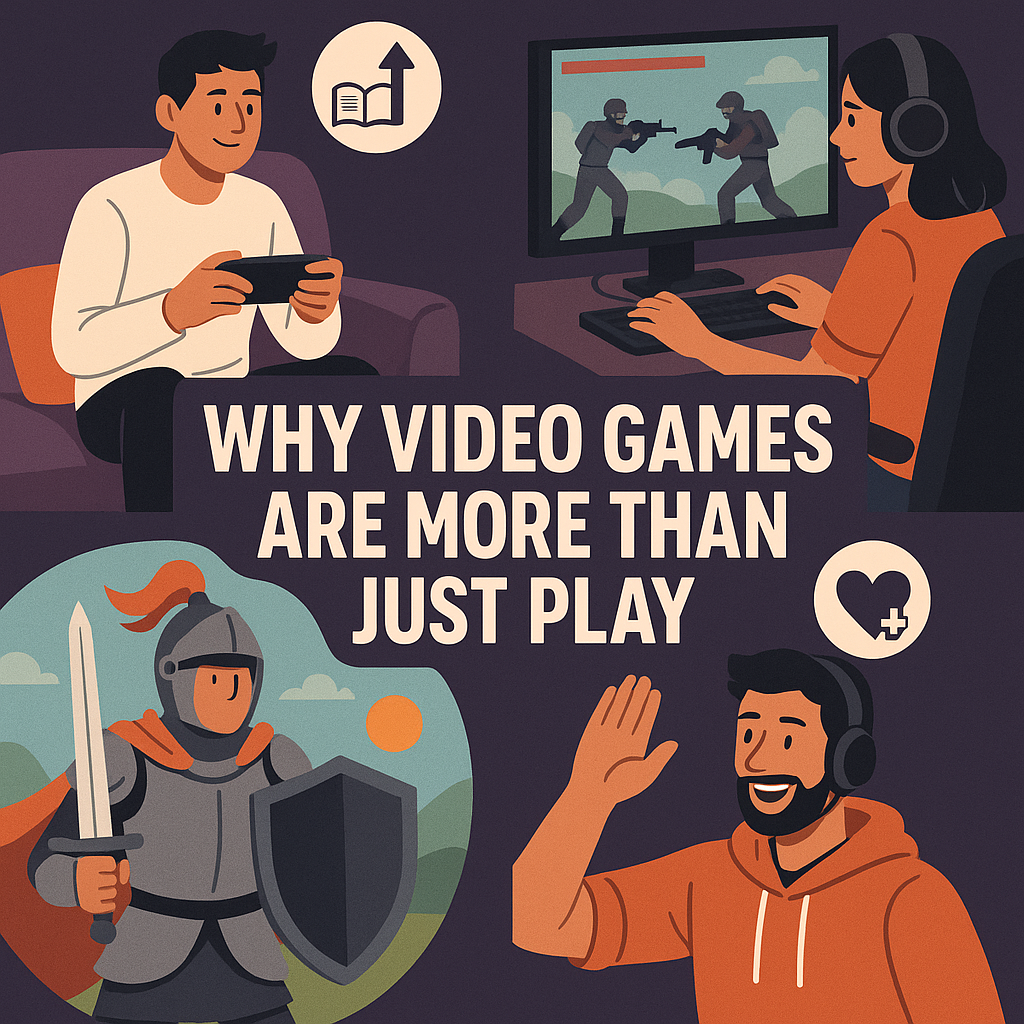
Video games aren't just entertainment - they're teachers, stress relievers, and mental gyms for the mind. They shape skills, provide meaning, and optimize mental health in ways few other media can.
The Storyline of my Gamer Journey
It started with Pokémon Black & White. A handheld adventure where choices shaped skills, strategies, and outcomes. From there, the path evolved into Halo 3 multiplayer parties with friends, the competitive roar of MLG Call of Duty tournaments, and the high-speed tactics of Titanfall 2 world circuits. Today, it's casual multiplayer nights with friends and deep single-player campaigns that feel more like novels than "just games."
The beauty of gaming is that each era tells its own story - not just in the pixels on screen, but in the lessons that sink deep into who we are.
Lessons Hidden in the Medium
Every title whispers something different.
- A single-player puzzle like Portal trains problem-solving and patience.
- A sweeping RPG like Cyberpunk 2077 teaches the weight of consequences and the importance of moral choice.
- A multiplayer shooter like CounterStrike shows the value of trust, communication, and teamwork under fire.
Games are mirrors, reflecting challenges and growth arcs that stay with us long after the credits roll.
The Counterpoint: "A Waste of Time"
Of course, critics often label gaming as immature - a "waste of time" reserved for children. But let's be honest: are video games really worse than spending hours drinking at a bar, binging endless TV shows, or scrolling social media feeds until your brain is mush?
At least with gaming, you're engaging. You're solving problems, making decisions, and coordinating with others. Reading a book is respected, yet it's a passive activity. Watching TV is normalized, yet it rarely teaches resilience. Gaming, by contrast, offers the interactivity of a chess match, the camaraderie of a team sport, and the narrative depth of a novel - all in one.
If we measure hobbies by growth, mental engagement, and health, then gaming isn't the worst option on the shelf - it might actually be one of the best.
Skillset Beyond the Controller
Unlike movies or books, games are interactive arenas where your decisions matter. That interactivity builds real-world abilities:
- Multiplayer skills: coordination, leadership, communication, and real-time strategy.
- Single-player skills: foresight, decision-making, empathy, resilience.
- Meta-skills: adaptability, focus under pressure, and the art of balancing risk with reward.
Furthermore, research has shown that gaming - in moderation - can help reduce stress, enhance memory, and keep the brain sharp. It's mental health optimization disguised as fun.
Conclusion: The Power of Play
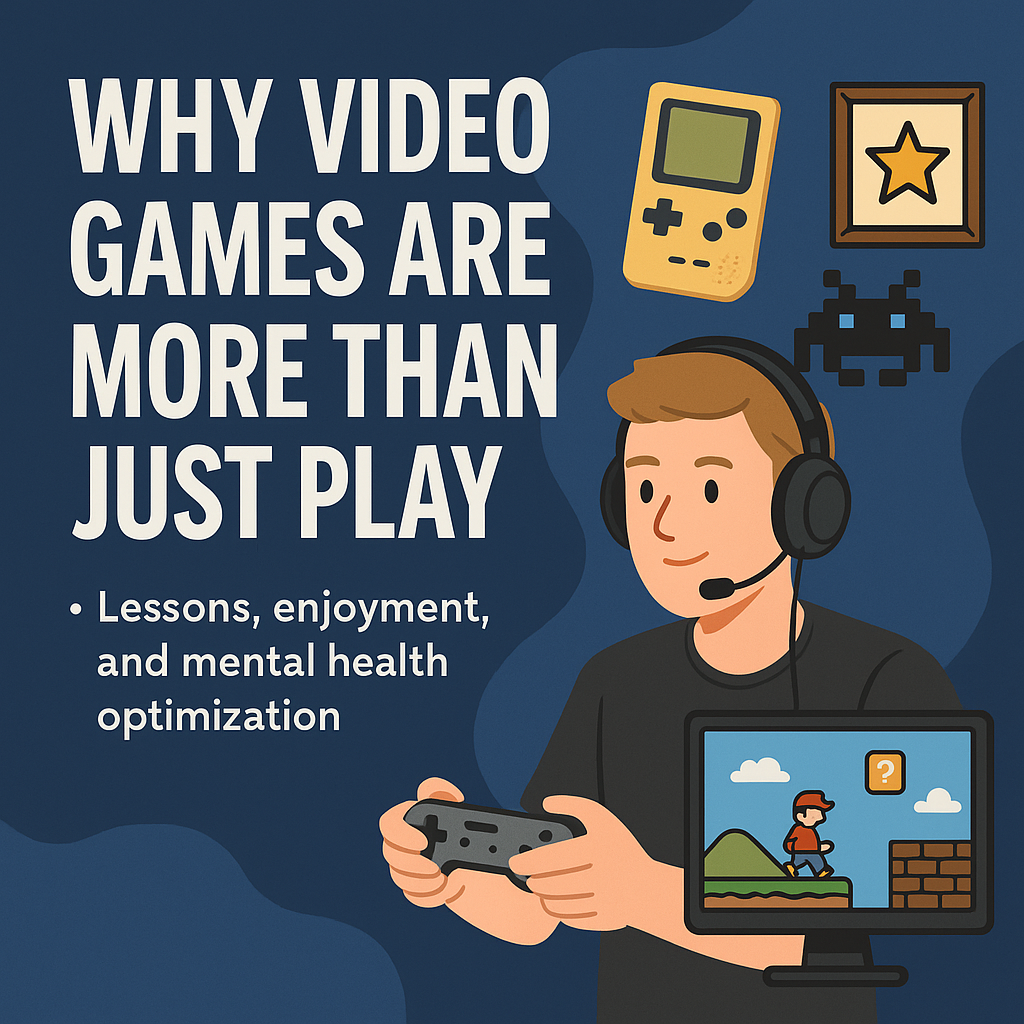
Video games are not a waste of time - they are an investment of time. Each quest, each match, each story arc polishes some part of us. They entertain, educate, and strengthen.
So, the next time someone says, "It's just a game," remember: it's not just play. It's practice for life. Every game is more than pixels - it's a mirror, a compass, a gateway to the deeper self.

About Alec Furrier
Builder, sovereign systems architect, and competitive operator. Alec designs agentic infrastructure, runs elite-level combat sports and lifting cycles, and posts raw field notes from the intersection of AI autonomy, physical performance, and strategic capital deployment.